Why Everyone is Buying the Qn90C Qn90Cd Qled (Full Review)
Introduction — My months with the Qn90C/Qn90Cd
I've been using the Qn90C Qn90Cd QLED as my primary living-room TV for several months now. I bought it because I wanted a bright, punchy screen for a mixture of streaming movies, sports, and gaming, and because the reviews I read pointed to the Neo QLED approach as a sweet spot between OLED blacks and traditional LCD brightness. What I found was a mostly excellent daily TV with a few real-world imperfections that only show up when you look closely.
What I actually bought and why
To be precise, I ended up with the mid-size variant of the line because it matched my room and budget. I considered the Qn90C and the Qn90Cd side by side: both share the same core Neo QLED picture engine, but the Cd model felt like the slightly more premium finish with a few small differences in stand options and speaker tuning. In my experience the differences aren’t huge for most buyers, but they mattered to me because I wanted the cleanest look on the wall and slightly fuller built-in audio while I waited to pair a soundbar.
First impressions — design and setup
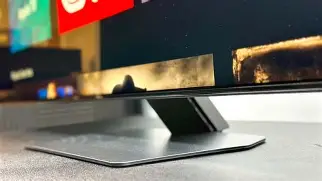
Unboxing and setup took about 20–30 minutes including wall-mounting. The TV arrives thinner than older full-array LED screens — thanks to the mini-LED backlight layout — and the bezels are minimal, which is how it looks when you first power it on: very modern. I appreciated the attention to cable management on the stand and the included remote is small and lightweight; the solar/energy-recharging feature has been handy so I don’t worry about constantly replacing batteries.
Picture quality — real-world performance
Picture is where the Qn90C/Qn90Cd earns most of its praise. After using it for months, here's what stood out to me:
- Brightness and HDR impact: In my living room, which has large windows and a lot of ambient light during the day, HDR content still looks vivid. Highlights pop without looking blown out. I watched several HDR10+ encoded streams and still got a satisfying punch in specular highlights — sun glare on water, bright neon signs, and cinematic explosions all had presence.
- Local dimming and contrast: The mini-LED array with aggressive local dimming gives strong contrast and deep-ish blacks for an LED-based TV. In dim scenes there are moments where the blacks are very convincing. However, in certain high-contrast scenes (for example, a bright scoreboard over an otherwise dark stadium), I noticed some haloing around bright objects — the usual trade-off for zoned backlight systems vs. pixel-perfect OLED blacks.
- Color and upscaling: Colors are saturated but controlled — not cartoonish. The TV’s processor does an excellent job upscaling sub-HD content and older HD movies; faces, textures, and fine detail are preserved without appearing artificially sharpened most of the time. Streaming apps with good bitrate look exceptional.
- Viewing angles: One thing I noticed was that color and contrast drop off faster than on an OLED when you view the screen from extreme side angles. For me, this only mattered when I had a crowd with people sitting wide off-axis; in regular living-room setups with a moderately wide couch, it wasn't a dealbreaker.
Calibration and picture modes
Out of the box I switched from the default "Vivid" or "Dynamic" picture modes to the "Movie" profile and reduced the backlight a bit for evening viewing. That change alone eliminated the over-saturated look that the default settings push. I also turned off motion smoothing for film content because it introduced the soap-opera effect; for sports and fast action I enabled the higher motion settings and was happy with the clarity and minimal judder.
Smart TV experience — Tizen in daily life
I've been using this TV with a mix of native streaming apps and casting from phones/PCs. The smart platform is Samsung's Tizen OS, and for me it performed reliably. Apps open quickly, navigation is snappy, and the layout for frequently used apps is convenient. A couple of times I installed a newer app and had to wait for a firmware update before a minor feature worked correctly, but those updates arrive regularly and typically resolve quirks.
What I appreciated most was the integrated universal guide and the Gaming Hub (useful for browsing streaming game demos or cloud titles). One irritation: the UI occasionally surfaces promotional tiles or recommendations that feel intrusive. I was able to minimize the clutter through settings, but if you want an entirely ad-free UI, be prepared to dig through a few menus.
Sound quality — built-in speakers vs real life
The TV’s built-in speakers are better than many flatscreens I've tried, and the object-tracking audio features create a decent sense of directional presence for dialogue and some effects. In my experience, however, the bass is limited and large, room-filling soundtracks are better experienced with a dedicated soundbar or AV receiver. For casual TV, streaming, or games with headphones, the internal speakers are totally fine. If you care about home theater-level audio, plan to add a separate system.
Looking for the best TVs & Home Theater deals on Amazon?
Shop Amazon →Gaming performance — latency and features
As a gamer I tested the TV with a modern console and a gaming PC. Here’s what I noticed after a few weeks of gaming sessions:
- Low input lag: Game Mode reduced input lag noticeably. Fast-paced shooters and platformers felt responsive and natural.
- 120Hz panel and VRR: The panel supports 120Hz and variable refresh rate, which made a real difference for smooth gameplay and reduced stutter. Compatible consoles and GPUs took advantage of this, and I noticed stable frame pacing in most titles.
- HDMI 2.1 features: I used the high-bandwidth HDMI inputs for my console and was able to enable 4K 120Hz modes where supported. This TV handles modern console features well, including automatic switching into Game Mode when a console is powered on.
Everyday reliability and firmware behavior
Over the months, the TV has been stable. I had one firmware update that briefly changed a user preference (a picture mode switched back to default), but that was quickly fixed with the next patch. Remote latency hasn't been an issue and voice commands work reasonably well in my room, though background noise can sometimes reduce accuracy. Power consumption is typical for bright high-end LED TVs — it’s not a power hog, but it’s not as low as a mid-range LCD in eco mode.
Real disappointments — what I wish were better
To be fair, there are a few things that bothered me during regular use:
- Occasional blooming/halo around very bright objects in dark scenes — visible if you pay attention and more apparent on larger sizes.
- Viewing angles are narrower than OLED — color washing occurs off-axis.
- Some UI elements push promotions and recommendations that feel distracting until you tweak settings.
- Built-in speakers lack bass, so cinematic music tracks don’t have the weight I’d hoped for without a soundbar.
Pros & Cons
- Pros:
- Stunning brightness and punchy HDR highlights in bright rooms
- Excellent color accuracy after basic calibration
- Very good upscaling and motion handling for fast content
- Strong gaming feature set: 120Hz, VRR, low input lag
- Premium design with thin bezels and sensible cable management
- Reliable smart platform with a wide app selection
- Cons:
- Local dimming can produce haloing in certain scenes
- Viewing angles not as good as OLED — color/contrast loss off-axis
- Built-in audio is competent but not immersive — consider a soundbar
- Occasional UI promotions and settings resets after updates
Comparison: Qn90C vs Qn90Cd (at a glance)
| Feature | Qn90C | Qn90Cd |
|---|---|---|
| Core display tech | Neo QLED / Mini-LED backlight | Neo QLED / Mini-LED backlight |
| Processor & upscaling | High-end Samsung processor for upscaling | Same or slightly tuned variant; similar upscaling quality |
| Design / finish | Modern bezel, multiple stand options | Typically premium finish, slightly different stand/trim choices |
| Speakers | Good built-in speakers; object tracking features | Usually tuned for fuller sound; small difference in audio signature |
| Smart platform | Tizen OS, broad app support | Tizen OS, broad app support |
| Gaming features | 120Hz, VRR, low latency | 120Hz, VRR, low latency |
| Best for | Anyone wanting bright HDR and gaming-ready features | Those who want a slightly more premium finish and audio tuning |
Buying guide — how to decide if this is right for you
Here are the practical considerations I used when choosing and living with this TV. Think of these as the checklist I wish I'd had before buying.
1. Room environment — bright or dark?
If your TV sits in a bright living room with windows and ambient light, this line performs excellently. The high peak brightness and anti-reflection treatments keep content visible and vibrant. If your room is a dedicated dark theatre and you primarily care about absolute black levels and perfect off-axis viewing, you might prefer an OLED. In my home (a mixed bright/dim environment), the Qn90 series hit the sweet spot.
2. Primary use — movies, sports, or gaming?
For mixed use — streaming films, live sports, and gaming — this TV is one of the most versatile options I’ve used. Gamers will appreciate the 120Hz and VRR support. Sports fans will like the motion clarity and brightness. Movie lovers get strong HDR highlights, though if you crave pure, infinite blacks for cinematic scenes, OLED still wins in my experience.
3. Size and viewing distance
Choose your size based on viewing distance and room layout. Larger sizes emphasize the haloing artifacts in extreme high-contrast scenes, so if you want a very big screen and sit relatively close, be prepared to notice the backlight trade-offs. For most living-room setups, mid to large sizes are fantastic and give immersive impact without obvious flaws.
Find top-rated TVs & Home Theater products at great prices.
Shop Amazon →4. Audio setup
Plan for a soundbar if you watch a lot of movies or want fuller sound. I used the TV’s speakers for weeks and loved the clarity but missed low-end impact. Pairing it with a soundbar dramatically improved my experience and made the TV feel like a real home theater centerpiece.
5. Calibration and settings
Right after setup I recommend switching to the “Movie” or “Filmmaker” picture mode, turning off excess motion smoothing, and adjusting backlight levels to match your room. If you’re particular about color accuracy, a basic calibration (or a professional one) will get you the most accurate image, but most people will be happy after the simple tweaks I mentioned earlier.
6. Firmware and long-term support
Expect periodic firmware updates that improve features and fix quirks. I found Samsung to be reasonably responsive in rolling out updates. Keep the TV connected to the network and allow updates; they often improve the smart platform and stability.
Conclusion — who should buy the Qn90C/Qn90Cd?
After several months of daily use, the Qn90C/Qn90Cd has become the centerpiece of my living room because it combines bright, impactful HDR, strong gaming features, and a smart platform that just works. If you want a TV that can handle bright rooms, sport events, and console gaming while still delivering excellent cinematic moments, this line is a compelling choice.
That said, if you prioritize absolute black levels, perfect off-axis color, or deep built-in bass without adding external speakers, you’ll notice the trade-offs. For me, those trade-offs were acceptable because the overall picture quality, responsiveness, and design outweighed the drawbacks. I was surprised by how often I reached for the remote to show friends a scene — the image has real presence.
In short: I enjoyed living with the Qn90 series. It’s not perfect, but it’s consistently excellent in the ways that matter to most people — and that's why so many of us are buying it.