Which is Better Value? Akaso 360 vs Nisi V7 Filter Kit Compared
Choosing gear often forces a buyer to weigh immediate creative possibilities against long-term utility. At first glance the Akaso 360 and the NiSi V7 Filter Kit serve very different needs: one is a consumer-facing spherical camera that opens immersive capture workflows, while the other is a modular filter system that elevates image control for traditional lens-based cameras. This article examines both products through the lens of practical use, typical buyer priorities, and cost-to-benefit trade-offs so readers can decide which represents better value for their shooting style.
Introduction: Different Tools, Similar Questions
Both products appeal to photographers and videographers who want to solve a problem: the Akaso 360 addresses how to capture everything in a scene with a single device, whereas the NiSi V7 Filter Kit addresses how to control light and color using physical filters. Buyers typically care about image quality, ease of use, durability, ecosystem compatibility, and how an item fits into a workflow. The core question here is not simply “which is better?” but “which is better value for a specific set of needs?”
Product overviews
Akaso 360 — what it is and who it suits
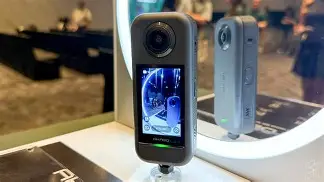
The Akaso 360 is a compact consumer 360-degree camera aimed at creators who want immersive footage without a heavy setup. It is positioned for travel vloggers, real estate walkthrough creators, social-media storytellers, and hobbyists who appreciate the simplicity of a single-device spherical capture workflow. Its main selling points are all-in-one capture, quick social-ready exports, and the novelty of immersive perspectives—things that appeal to users seeking convenience and a fast creative loop.
NiSi V7 Filter Kit — what it is and who it suits
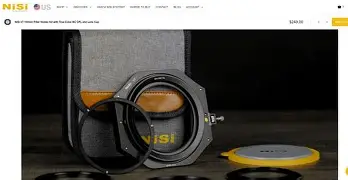
The NiSi V7 Filter Kit is a modular filter holder system built for photographers who use interchangeable-lens cameras and want precise control over exposure and color. Typical users are landscape photographers, architecture shooters, long-exposure enthusiasts, and professionals who seek consistently accurate results with neutral color rendition. The kit centers on a multi-slot holder and high-quality glass filters—ND, graduated ND, and circular polarizers—designed to minimize color cast and vignetting on wide-angle lenses.
Detailed analysis: real-world performance and considerations
Image quality and output
Akaso 360
- Spherical capture advantages: a 360 camera captures the entire environment, enabling reframing in post and interactive outputs. For travel, events, and VR-friendly projects this is a unique advantage.
- Limitations: 360 cameras historically trade per-pixel fidelity for coverage. In practical terms this means fine detail and low-light performance are generally inferior to a good mirrorless or DSLR with a prime lens. Buyers focused on large prints or tight crops should account for this.
NiSi V7 Filter Kit
- Optical quality: well-made glass filters preserve sharpness and color neutrality, which directly improves final image quality for landscape and architectural work.
- Creative control: filters like variable or solid ND and graduated NDs enable long exposures, balanced skies, and smoother motion—effects that cannot be reproduced by camera alone without compromising other settings.
Workflow and ease of use
Akaso 360
- Simplified capture: point-and-shoot 360 cameras are intuitive; results are immediately viewable and shareable via an accompanying app.
- Post-processing requirements: stitching, stabilization, and reframing are part of the workflow. While many apps automate these steps, advanced edits require specialized software and learning time.
NiSi V7 Filter Kit
- Hands-on process: attaching adapter rings, aligning the holder, and stacking filters requires a methodical approach. It’s a tactile part of the shoot for photographers who enjoy a deliberate workflow.
- Predictable results: once exposure and composition are set, the impact is immediate and often requires minimal correction in post, particularly if filters are color-neutral.
Durability, portability and build
Akaso 360
Looking for the best Cameras & Photography deals on Amazon?
See Deals →- Portability: lightweight and pocketable, making it attractive for travel packing and spontaneous capture.
- Durability: many consumer 360 cameras are reasonably robust, but they remain electronics—battery life, firmware updates, and physical protection are considerations.
NiSi V7 Filter Kit
- Build quality: filter holders and adapter rings are typically metal or high-grade polymer and built to withstand outdoor use; the filters themselves require care to avoid scratches.
- Portability: a full filter kit adds bulk to a photographer’s bag, and glass filters increase weight. For dedicated landscape sessions this is acceptable; for ultralight travel, it may be less so.
Compatibility and ecosystem
Akaso 360
- Standalone value: functions as a single unit—no additional lens ecosystem needed.
- Accessory ecosystem: mounts, cases, and some third-party accessories exist; however, integrating 360 footage into broader production pipelines may require extra software or plugins.
NiSi V7 Filter Kit
- Adapter rings and lens coverage: the kit’s usefulness depends on adapter rings and how well the holder avoids vignetting on wide lenses. Buyers should confirm ring sizes for their most-used lenses.
- Expandable system: filter kits like the V7 are designed to grow—additional filter types and more adapter ring sizes extend long-term value.
Pros & Cons
Akaso 360 — Pros & Cons
- Pros:
- Immersive capture that enables reframing and interactive content
- Very portable and easy to carry for travel and quick shoots
- Fast social-ready exports and simple sharing pipeline for non-technical users
- Cons:
- Per-pixel detail and low-light performance lag behind dedicated cameras
- Stitching artifacts and processing overhead can require time and software learning
- Less useful for print-centric workflows or where tight crops are required
NiSi V7 Filter Kit — Pros & Cons
- Pros:
- High-quality optical filters that improve final image fidelity
- Powerful creative control—ND, graduated ND, and polarizers enable looks not achievable with camera settings alone
- Expandable and long-lasting investment for lens-based systems
- Cons:
- Higher initial learning curve and physical bulk to carry
- Requires compatible lenses and rings—may need multiple adapter rings for a multi-lens kit
- Upfront cost and weight may deter casual shooters
Side-by-side comparison
| Attribute | Akaso 360 | NiSi V7 Filter Kit |
|---|---|---|
| Primary function | Capture full spherical video/photo in a single device | Control light and color for interchangeable-lens cameras |
| Typical users | Travel vloggers, real estate, social content creators | Landscape, architecture, long-exposure, and professional photographers |
| Impact on image quality | Enables unique framing but less per-pixel detail than standalone cameras | Directly improves final image sharpness, dynamic range handling, and color neutrality |
| Portability | Very portable and compact | Moderate to heavy depending on filters carried |
| Learning curve | Low to moderate (stitching and editing add complexity) | Moderate to high (filter selection and technique matter) |
| Long-term value | Best for creators who will frequently use immersive formats | High for photographers committed to landscape/architectural work |
| Best use cases | 360 video for immersive tours, travel diaries, creative VR-style edits | Long exposures, balanced skies, reduced reflections, and color control |
Buying guide: which to choose and when
To decide which is better value, consider the following questions. They help convert abstract differences into personal buying logic.
1. What is the primary output and audience?
If the goal is immersive content—interactive tours, VR clips, or social posts with an all-encompassing perspective—the Akaso 360 provides unique footage with a low barrier to entry. If the final output is high-quality landscape prints, commercial architecture work, or polished long-exposure images, the NiSi V7 Filter Kit more directly improves image fidelity.
2. What camera ecosystem is already in use?
Buyers who already own multiple lens sizes and a mirrorless/DSLR body will extract ongoing value from a modular filter system. Those starting fresh or traveling light, without a lens ecosystem, will find the Akaso 360 attractive because it is self-contained.
3. How important is portability vs control?
Akaso 360 is the portable choice. The NiSi V7 delivers control at the expense of additional weight and setup time. Photographers who accept the slightly slower setup in exchange for better images will prefer the NiSi option.
4. Is there interest in learning new workflows?
Using a 360 camera introduces stitching and spherical editing workflows. Filters require technique—metering for ND, aligning graduated filters, and managing polarizer rotation. Both require learning, but the skills are different. Consider which skillset aligns with long-term creative goals.
Shop the latest Cameras & Photography picks on Amazon.
See Deals →5. Longevity and expandability
Filter systems tend to be long-lived: glass filters can still be useful years later across camera upgrades. A 360 camera is more likely to be supplanted by newer models as sensor and stitching technology improves, though it may remain useful as a specialized tool.
Practical tips before purchasing
- Try to test sample footage or images: real-world samples reveal noise, stitching issues, or color neutrality.
- Check return policies and warranties—filters are precise optical tools and cameras are electronics.
- For filters, confirm adapter ring sizes for the primary lenses to avoid additional purchases.
- Factor in accessories: for 360 cameras consider mounts, memory cards, and protective cases; for filters consider a sturdy pouch and lens-cleaning supplies.
- Consider resale value: high-quality glass and established filter systems usually retain value better than consumer electronics.
Real-world scenarios: which choice makes more sense?
Travel vlogger and social-first creator
The Akaso 360 often offers superior value. Portability, the “wow” factor of immersive footage, and ease of sharing trump fine-grained image quality for platforms where novelty and engagement matter.
Landscape photographer shooting for galleries or clients
The NiSi V7 Filter Kit is usually the better investment. The control over dynamic range and reflections, plus high-quality optics, translate into superior prints and client deliverables.
Real estate photographer creating virtual tours
Akaso 360 is an efficient, cost-effective solution for quick walkthroughs and immersive listing content. The ability to capture entire rooms in one pass simplifies the process.
Wedding and event shooters who value versatility
This depends on style. A 360 camera can add a creative supplemental angle but will not replace traditional cameras. Filters are less relevant for event shooters who prioritize low-light performance and speed.
Conclusion
Value depends on intent. For creators who prioritize immersive, portable capture and who plan to publish interactive or social-first content, the Akaso 360 is a clear value proposition because it unlocks a creative format with minimal overhead. For photographers who want long-term optical control, improved image fidelity, and techniques like long exposures and graduated balancing, the NiSi V7 Filter Kit offers sustained, practical value that integrates across lenses and camera upgrades.
Both purchases can be justified as investments: one expands a creator’s format and speed of capture, the other enhances the technical quality of traditional photography. Prospective buyers should match the tool to their workflow, test real-world samples, and weigh portability against creative control before deciding which represents better value for their specific needs.